If you have a claim of up to $15,000 – the Disputes Tribunal provides a simple, cost-effective way of dealing with civil disputes. We outline below the basics of what you need to know to make a claim.
The Disputes Tribunal is not a court and there are no judges. Hearings are run by referees who will help the parties to reach an agreement. You can’t have a lawyer with you at the actual hearing – you have to represent yourself. You can, however, talk with us before lodging a claim or attending your hearing.

We do urge you, however, to try and settle your dispute rather than have to go to the Disputes Tribunal.
Claim threshold
Generally, the Disputes Tribunal is for claims of up to $15,000. However, if everyone agrees then the amount can be $20,000. If you have a dispute for between $15,000 and $200,000, you will need to go to the District Court. The High Court hears larger disputes.
Continue reading
The advantages, pitfalls and the Kawarau Falls case
If you live in one of New Zealand’s cities, it’s likely that you’ve noticed a multitude of brand-new apartments, terraces, and town houses popping up in your area. You may have decided that you too, want to secure one of these brand-new properties as an investment or as a home. What do you need to know before taking the plunge?
Many people choose to buy these kinds of properties ‘off the plans.’ Developers make building plans and specifications available to prospective purchasers and sell the properties ahead of construction as a method of convincing the bank to fund their project.

To secure one or more of these properties for yourself, you would need to enter into an agreement where you agree to pay a deposit (usually 5%–10 % of the developer’s asking price for the property) and then pay the balance on completion.
Before entering into any agreement with a developer, you should be aware of the advantages, and pitfalls, of buying off the plans. We have set out some below, but they are by no means exhaustive.
Continue reading
The pundits were right. The Minister of Finance, the Hon Steven Joyce, presented his first Budget on Thursday 25 May and it was definitely a ‘steady as she goes affair’ with few surprises.
The Minister said the outlook for New Zealand’s economy is positive and the Crown’s books are steadily improving. We highlight some of the Budget’s key points below.
Tax cuts
From 1 April 2018, there will be tax cuts for every working New Zealander with particular emphasis on lower to middle income earners.

Income that can be earned at the lowest tax rate of 10.5% will rise from $14,000 to $22,000 which means $11 more a week. The 17.5% income tax rate will be raised from $48,000 to $52,000 giving an increase of $20 a week.
Continue reading
At last year’s Melbourne Cup, a young Kiwi woman had her photograph circulated around the globe after a journalist photographed her antics at the races. As the woman was in a public place with no expectation of privacy no criminal offence was committed, nor was there any civil wrong. This would also be the case in New Zealand. The situation raises some interesting questions about how private is private when taking photographs in a public place?

What are the rules?
It’s generally lawful to take and/or publish photos or film people in public places such as a beach, shopping mall, park or other public place without their consent. There is no expectation of privacy in these places.
Continue reading
Further implementation of bobby calf regulations
Last year new regulations for young calves were introduced and took effect from 1 August 2016; we covered this in Rural eSpeaking, Winter/Spring 2016.
On 1 February, a new regulation came into force; bobby calves are to be fed at least once in the 24 hours before slaughter (a reduction from 30 hours).

Further regulations are to take effect this year including:
- Proposed 1 August 2017: Suitable shelter will have to be provided for young calves before and during transportation, and at points of sale or slaughter, and
- Proposed 1 August 2017: Loading and unloading facilities will have to be provided and used when young calves are transported for sale and slaughter. The facilities must be designed so that a calf is able to walk on or off the transport.
Continue reading
Give it some thought when buying or selling
Agreements for the sale and purchase of rural land generally contain a ‘good husbandry’ clause. This clause is often inserted into the agreement as a ‘boiler plate’ or standard clause by real estate agents when preparing contracts. We discuss why it’s better to tailor-make this clause to suit each transaction.

The standard clause is often worded along these lines:
From the date of this Agreement until settlement, the Vendor shall continue to farm the property in a good and husband-like manner and in accordance with approved good farming practice in the district and shall neither overstock nor under-stock the property, nor do anything to impoverish the soil nor remove or damage any improvement or fixtures on the property.
However, both a seller and a buyer should give careful thought to the wording of this clause and its implications; it should be tailored to suit the particulars of any given transaction. This is particularly so for transactions where settlement is some time out from when the agreement was signed. It also needs to relate to properties where specific types of farming are being carried out.
Continue reading
What does this mean for farmers?
The government recently announced its Clean Water Package. The release has caused considerable controversy, largely around the proposed target of 90% of rivers and lakes being ‘swimmable’ by 2040 and, in particular, the E.coli guidelines for swimmable rivers being 540 E.coli per 100mls.
The Green Party and Labour Party were vociferous in their criticism of the government’s announcement largely because the amount of E.coli that can be present in swimmable water has doubled.
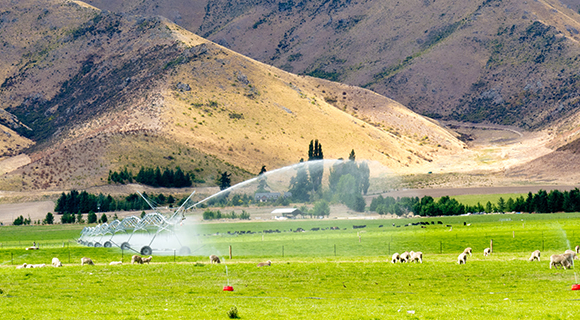
As well, Forest and Bird advised the Minister for the Environment, Dr Nick Smith and the Minister for Primary Industries, Nathan Guy that it was withdrawing from the Land and Water Forum. Forest and Bird is a very influential pressure group in this arena; it took legal action in relation to the proposed Ruataniwha Dam and that matter is still being litigated.
Continue reading
Keep it protected
For many people a gift by Will (also known as a legacy) from a relative or friend can be very significant – both personally and financially. The relative or friend wants to show you kindness but also usually wants the gift to be of real benefit to you personally. The gift is not intended to benefit other parties such as creditors, the Official Assignee or a de facto partner, however, unless it’s protected, that can be the unintended outcome.

Relationship property claims
If you are a beneficiary under a Will and you’re married, in a civil union or de facto relationship, the gift (under the Will) is separate property (as opposed to relationship property). The difference is important because if your marriage or relationship breaks down or you die, your spouse or partner cannot claim half of the gift (or its proceeds) because it’s separate property which is not subject to the equal sharing regime under the Property (Relationships) Act 1976.
Continue reading
Planning is key
Most owners want to ensure their business will continue after they have died. Often they want their family to be able to carry on the business. A common form of business in New Zealand is the family farm and this poses particular problems all of its own. Most people know that they need to have an up-to-date Will and Enduring Powers of Attorney (EPA) to cope with any unexpected events. However, there is a lot more planning that you should do as well.

Continue reading
Some key proposals
In late 2013, the Law Commission completed a report recommending that a new Trusts Act replace the Trustee Act 1956. The public consultation phase began last December with the release of the exposure draft Bill. It is intended that the new legislation will be the primary source of trust law in New Zealand. We outline below some key proposals.

Definition
Most trusts in New Zealand are established with a written trust deed or other document such as a Will. These are known as ‘express trusts.’ The Bill only applies to express trusts. Characteristics of express trusts are defined in the Bill as:
Continue reading
