
WorkplaceSafety

The former chief executive of Port of Auckland Ltd (POAL), Tony Gibson, lost his appeal against his conviction under the Health and Safety at Work Act 2015 (HSWA) following the night shift death of a port worker, Pala’amo Kalati. Mr Kalati was crushed by a container while helping to unload a container ship. The High Court confirmed the District Court’s decision on the duties of an officer of a large organisation under the HSWA.


Failure to take steps to minimise risk

The High Court[1] confirmed that Mr Gibson had failed to take the steps that a reasonable officer in his position would have taken to minimise the risk of an accident occurring. The court agreed with the District Court that Mr Gibson was personally aware of the risks associated with loading and unloading containers, that the company’s documentation containing its rules for handling containers was unclear, and that the company had inadequate systems in place to determine whether its workers were complying with its rules.

The court also agreed that Mr Gibson should have been aware of the serious risks associated with handling containers following the 2018 death of one of the port’s workers.

The High Court also upheld the District Court’s decision to impose a fine of $130,000 on Mr Gibson and to order him to pay a further $60,000 in court costs.

The court’s decision confirms several principles relating to the duties of company officers under the HSWA, which were set down in the District Court’s decision. These are:

  • It is not enough for a company officer to ensure that systems are in place to protect workers’ safety. They must also ensure that work practices are monitored for compliance. They must ensure that they are aware of how their staff actually carry out their work as opposed to how they are supposed to do so, and
  • A company officer cannot simply delegate their health and safety responsibilities to someone else in their company and rely on that person to ensure compliance with health and safety rules, without proper enquiry that the organisation’s systems are adequately addressing health and safety risks. They must critically examine information provided to them by their staff relating to health and safety. They must also create mechanisms to verify the information they are receiving.


Maritime New Zealand, the government body with responsibility for health and safety prosecutions relating to ports, only charged POAL’s chief executive officer. The High Court observed that there were a number of different people at the port company, including directors and managers, who had obligations under the HSWA who could also have been charged.

This decision emphasises that both those involved in governance and operational matters in a large organisation may have personal health and safety obligations.

If you have any concerns about your health and safety obligations as a company director or senior employee, please don’t hesitate to contact us.


[1] Gibson v Maritime New Zealand [2026] NZHC 813.


DISCLAIMER: All the information published in Fineprint is true and accurate to the best of the authors’ knowledge. It should not be a substitute for legal advice. No liability is assumed by the authors or publisher for losses suffered by any person or organisation relying directly or indirectly on this newsletter. Views expressed are those of individual authors, and do not necessarily reflect the view of Edmonds Judd. Articles appearing in Fineprint may be reproduced with prior approval from the editor and credit given to the source.
Copyright, NZ LAW Limited, 2026.     Editor: Adrienne Olsen.       E-mail: [email protected]     Ph: 029 286 3650 


Over the fence

High Court upholds personal liability on forestry directors for environmental costs

A recent New Zealand High Court decision[1] has reinforced that company directors can be held personally liable for environmental damage caused by forestry operations.

The court determined that the directors of the companies involved should have taken action to clean up the forestry work. Failing to do so resulted in safety concerns: the land was prone to erosion and was steeply forested, resulting in a downstream of left-over woody debris, slash and sediment that was harmful to the environment and could be harmful in a flood.

The appeal affirmed the decision reached in the Environment Court in 2025.

The result of the High Court’s decision means that company directors in the rural forestry sector must take notice of the work completed on site and actively take steps to avoid issues. Directors cannot avoid liability by relying on corporate structures alone.

The directors had a duty to ensure consents and the Resource Management Act 1991 were complied with, and their failure to do so had serious financial consequences for them. As directors may be found personally liable, the culpability and costs for environmental breaches may not be limited to the assets of the company and may have financial implications for the directors personally.


Wilding pines: Budget 2026 injection

Wilding pines are self-seeded conifers. These trees can have environmental benefits including providing timber and shelter, storing carbon, decreasing erosion, and improving water and soil when planted correctly.

However, wilding pines can cause issues including invading tussock grasslands or native landscapes, drying out water catchments and raising the risk for wildfires. The impact can differ depending on the area.

To help manage wilding pines, in the 2026 Budget the government committed an additional $79 million to be spent over the next three years on the National Wilding Conifer Control Programme lifting the total committed funding to $109 million. The funding will go towards protecting farmland, water supplies, reducing wildfire risk in affected areas and the protection of native biodiversity.

New Zealand’s pine industry has become one of the country’s most important land uses shaping the economy, environment and rural communities. Managed plantations earn billions in export revenue each year. Wilding pines can jeopardise this.

The funding increase reflects New Zealand’s value for biosecurity protection and forward future-based thinking. Managing the spread of wilding pines will be mitigated through collaborative governance as volunteers, landowners, iwi and community trusts are also committed towards wilding pine control.


Rural Roading Resilience investment

Rural roads are relied on by communities, tourists and freight operators; damage to these roads can lead to communities being cut off in severe weather events and a risk to health and safety of those on the road. These roads provide, amongst other things, access for freight, school transport, tourism and emergency access.

The 2026 Budget committed funds to the Rural Roading Resilience project. Its purpose is to strengthen roads rather than continually repairing them once the damage is done. The Budget allocated $400 million towards a package of state highway resilience upgrades.

When severe weather events damage rural roads, access to the wider rural community can be limited until the issues are rectified. Strengthening roads before an issue arises aims to limit the impact of severe weather events on rural communities and to allow freight routes to continue with minimal disruption.

The funding will be used towards improving drainage, slope stabilisation and rockfall protection. It will also fund the development of flood mapping systems and emergency management tools, including hazard maps and evacuation or emergency information. This will help local councils and communities to plan for flood risks. The focus will be on predicted areas of consistent vulnerability. It is hoped better preparation will minimise the long-term costs incurred by taxpayers.

[1] Samnic Forest Management Ltd v Gisborne District Council [2026] NZHC 1880.


DISCLAIMER: All the information published in Rural eSpeaking is true and accurate to the best of the authors’ knowledge. It should not be a substitute for legal advice. No liability is assumed by the authors or publisher for losses suffered by any person or organisation relying directly or indirectly on this newsletter. Views expressed are those of individual authors, and do not necessarily reflect the view of Edmonds Judd. Articles appearing in Rural eSpeaking may be reproduced with prior approval from the editor and credit given to the source.
Content Copyright © NZ LAW Limited, 2026.    Editor: Adrienne Olsen.       E-mail: [email protected]      Ph: 029 286 3650


Expected to be enacted in the spring

The Health and Safety at Work Amendment Bill was introduced into Parliament on 8 February 2026 and passed its first reading on 12 February 2026. It is currently before the Education and Workforce Select Committee. Submissions closed at the end of March and the committee is scheduled to report back to Parliament by 12 June 2026. It is anticipated that the Bill will be passed before the election (early November).

If enacted, the Bill will represent the most significant reform of health and safety law in New Zealand since the Health and Safety at Work Act (HSWA) was passed in 2015.


Purpose of Bill

Workplace Relations and Safety Minister, the Hon Brooke van Velden, said that the Bill is intended to reduce compliance obligations, focus on preventing serious harm and clarify businesses’ obligations under the HSWA.[1] The key proposed changes in the Bill are:

  • Increased focus on preventing serious harm
  • Reducing compliance obligations for small businesses
  • Clarification of the health and safety obligations of landowners, and
  • Clarification of the relationship between health and safety legislation, and other legal requirements.


Introducing ‘critical risk’

The Bill introduces a new defined term of ‘critical risk.’ Small businesses must focus on avoiding critical risks. All other businesses must manage all risks but are required to ‘prioritise’ critical risks.

The Bill defines a ‘critical risk’ as a risk associated with one of the matters specified in Schedule 1A of the Bill; this lists a number of specific high-risk activities such as working with asbestos and other hazardous substances. A critical risk also includes any hazard that is likely to result in death, a notifiable injury or illness, a notifiable incident or an occupational disease listed in Schedule 2 of the Accident Compensation Act 2001.

Identifying what the critical risks are for a particular business is likely to be one of the more challenging aspects of the new legislation.


The impact on small to medium-sized businesses

The most significant change contained in the Bill is the narrowing of the duties of small to medium-sized businesses, referred to as ‘small PCBUs,’ to risks that are defined as critical risks under the Act.

This does not mean that small businesses have no obligations in relation to other risks. They are still required to provide adequate facilities to ensure the safety of their employees.

A small PCBU will be defined as a business with fewer than 20 employees. Businesses that have a fluctuating workforce will qualify provided that they have fewer than 20 employees for at least nine months of the year. This change is likely to have a significant impact on the compliance obligations of businesses in New Zealand, given that approximately 97% of businesses would qualify as a small PCBU.[1]


Obligations of landowners and recreational activities

Potential exposure to prosecution under health and safety legislation in New Zealand has long been a concern for landowners who wish to make their land available for recreational activities.

In the past, this has been a particular concern for rural landowners who have often avoided providing access to their land due to such concerns. It has also discouraged public landowners, such as schools and councils, from allowing their land to be used for recreational activities.

The potential liability of landowners was recently highlighted by the prosecution of the owner of Whakaari/White Island following the eruption in 2019, which resulted in the deaths of 22 people. The landowner was initially convicted in the District Court under the HSWA, despite not directly operating the tours to the island.[2] The High Court overturned this conviction on appeal.[3]

The passing of the Bill would mean that landowners would not generally owe health and safety obligations to people using their land for recreational activities.


The Health and Safety at Work Act and other legislation

The Bill would clarify the relationship between general health and safety legislation, and other legislation that applies to specific industries such as the aviation and maritime sectors.

In the past, there has been confusion as to whether or not businesses in industries covered by specific legislation have additional duties under the HSWA. The Bill clarifies that compliance with industry-specific legislation or approved industry codes of practice is also compliance with the HSWA, so there are no additional obligations.

The Bill also states that the owners of earthquake-prone buildings do not need to take additional steps under the HSWA, provided that they comply with the requirements of the Building Act 2004.

The Bill is intended to reduce the compliance work that is required by businesses under current health and safety legislation, which has become an expensive ’tick-box’ exercise for many. However, it will still be important for small businesses to identify the ‘critical risks’ in their businesses and to take steps to mitigate them.

If you have any concerns about the impact that this proposed legislation may have on your business, please don’t hesitate to contact us.


[1] New Zealand business demography statistics at February 2025, Statistics New Zealand.

[2] WorkSafe New Zealand v Whakaari Management Ltd [2023] NZDC 4149.

[3] Whakaari Management Ltd v WorkSafe New Zealand [2025] NZHC 288.


DISCLAIMER: All the information published in Commerical eSpeaking is true and accurate to the best of the authors’ knowledge. It should not be a substitute for legal advice. No liability is assumed by the authors or publisher for losses suffered by any person or organisation relying directly or indirectly on this newsletter. Views expressed are those of individual authors, and do not necessarily reflect the view of Edmonds Judd. Articles appearing in Commerical eSpeaking may be reproduced with prior approval from the editor and credit given to the source.
Content Copyright © NZ LAW Limited, 2026.    Editor: Adrienne Olsen.       E-mail: [email protected]      Ph: 029 286 3650

Development of Approved Codes of Practice

WorkSafe New Zealand has promised greater attention to safety in the agricultural sector when it announced the new four-year ‘Statement of Intent’ on 4 December 2025.

In recent years, WorkSafe has significantly increased its focus on the agricultural sector reflecting the industry’s persistently high rates of serious injury and fatalities. Farming remains one of the most hazardous occupations in New Zealand, and WorkSafe’s evolving approach aims to address the root causes of harm while working more collaboratively with those on the land.

A key development has been the designation of agriculture as a priority high-risk sector. Alongside the other sectors classified as high-risk (construction, manufacturing and forestry), farming now receives a significantly greater share of WorkSafe’s attention and resources.

This prioritisation is embedded in the regulator’s broader strategy which centres on reducing fatalities, minimising serious injuries and targeting the activities most likely to cause harm. Rather than applying a one-size-fits-all regulatory model, WorkSafe is increasingly tailoring its interventions to reflect the unique risks present on farms.


Greater attention

One of the most visible aspects of WorkSafe’s effort is the development of Approved Codes of Practice (ACOPs) specific to agriculture. These codes are designed to clarify what ‘good practice’ looks like in practical, farm-based scenarios.

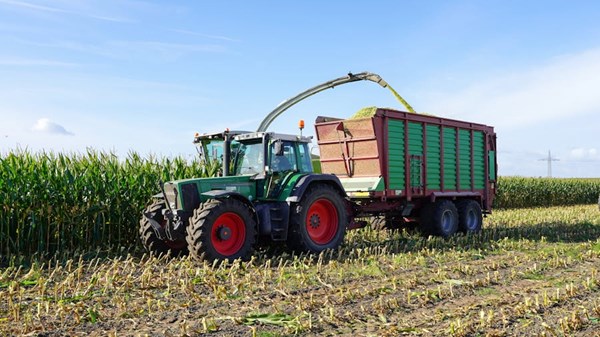
Current and emerging ACOPs focus heavily on the use of vehicles and machinery – areas consistently identified as leading causes of death and injury on farms. This includes guidance on quad bikes, tractors, utes and side-by-side vehicles, as well as their safe operation on uneven terrain and proper maintenance procedures.

Additional codes address responsibilities in multi-operator environments and provide clearer expectations around child safety on farms – an issue of ongoing concern in rural communities.

Alongside regulatory guidance, WorkSafe has expanded its on-the-ground presence. Inspectors are increasingly visiting farms not only to assess compliance, but also to engage directly with farmers and workers.

Hundreds of visits have been carried out in concentrated periods, with around 1,000 farm visits conducted between October and December 2025 with a focus on observing real-world practices involving machinery, hazardous substances and general risk management.

These visits are not purely enforcement-driven; they are also intended to provide practical advice and identify common issues across the sector. This hands-on approach allows WorkSafe to gather valuable data while building relationships within the farming community.


More collaboration

Another important element of WorkSafe’s strategy is its emphasis on education and industry collaboration. Acknowledging that lasting improvements in safety require cultural change, the regulator has partnered with industry groups and events to promote safer practices. Campaigns and resources such as ‘Keep safe, keep farming’ aim to integrate health and safety into everyday decision-making on farms.

By working with organisations that already have credibility in rural communities, WorkSafe’s aim is to influence behaviour in a way that traditional enforcement alone cannot achieve.

Perhaps the most notable shift in WorkSafe’s approach is its move toward a more balanced model of regulation, combining enforcement with proactive guidance.

While WorkSafe retains the ability to take enforcement action where necessary, there is now a stronger emphasis on helping farmers understand and meet their obligations before incidents occur.

This reflects an understanding that many farmers operate in complex, resource-constrained environments where practical, accessible advice can be more effective than punitive measures alone.


Looking ahead

WorkSafe New Zealand’s activities in the agricultural sector represent an evolving strategy.

Through targeted regulation, increased farm visits, collaborative education efforts and a focus on the most significant risks, the regulator is working to improve safety outcomes across one of New Zealand’s most vital industries. While challenges remain, the current approach signals a commitment to reducing harm through both accountability and support.

To read more on WorkSafe’s ACOPs, click here.


DISCLAIMER: All the information published in Rural eSpeaking is true and accurate to the best of the authors’ knowledge. It should not be a substitute for legal advice. No liability is assumed by the authors or publisher for losses suffered by any person or organisation relying directly or indirectly on this newsletter. Views expressed are those of individual authors, and do not necessarily reflect the view of Edmonds Judd. Articles appearing in Rural eSpeaking may be reproduced with prior approval from the editor and credit given to the source.
Content Copyright © NZ LAW Limited, 2026.    Editor: Adrienne Olsen.       E-mail: [email protected]      Ph: 029 286 3650