
Worksafe

Expected to be enacted in the spring

The Health and Safety at Work Amendment Bill was introduced into Parliament on 8 February 2026 and passed its first reading on 12 February 2026. It is currently before the Education and Workforce Select Committee. Submissions closed at the end of March and the committee is scheduled to report back to Parliament by 12 June 2026. It is anticipated that the Bill will be passed before the election (early November).

If enacted, the Bill will represent the most significant reform of health and safety law in New Zealand since the Health and Safety at Work Act (HSWA) was passed in 2015.


Purpose of Bill

Workplace Relations and Safety Minister, the Hon Brooke van Velden, said that the Bill is intended to reduce compliance obligations, focus on preventing serious harm and clarify businesses’ obligations under the HSWA.[1] The key proposed changes in the Bill are:

  • Increased focus on preventing serious harm
  • Reducing compliance obligations for small businesses
  • Clarification of the health and safety obligations of landowners, and
  • Clarification of the relationship between health and safety legislation, and other legal requirements.


Introducing ‘critical risk’

The Bill introduces a new defined term of ‘critical risk.’ Small businesses must focus on avoiding critical risks. All other businesses must manage all risks but are required to ‘prioritise’ critical risks.

The Bill defines a ‘critical risk’ as a risk associated with one of the matters specified in Schedule 1A of the Bill; this lists a number of specific high-risk activities such as working with asbestos and other hazardous substances. A critical risk also includes any hazard that is likely to result in death, a notifiable injury or illness, a notifiable incident or an occupational disease listed in Schedule 2 of the Accident Compensation Act 2001.

Identifying what the critical risks are for a particular business is likely to be one of the more challenging aspects of the new legislation.


The impact on small to medium-sized businesses

The most significant change contained in the Bill is the narrowing of the duties of small to medium-sized businesses, referred to as ‘small PCBUs,’ to risks that are defined as critical risks under the Act.

This does not mean that small businesses have no obligations in relation to other risks. They are still required to provide adequate facilities to ensure the safety of their employees.

A small PCBU will be defined as a business with fewer than 20 employees. Businesses that have a fluctuating workforce will qualify provided that they have fewer than 20 employees for at least nine months of the year. This change is likely to have a significant impact on the compliance obligations of businesses in New Zealand, given that approximately 97% of businesses would qualify as a small PCBU.[1]


Obligations of landowners and recreational activities

Potential exposure to prosecution under health and safety legislation in New Zealand has long been a concern for landowners who wish to make their land available for recreational activities.

In the past, this has been a particular concern for rural landowners who have often avoided providing access to their land due to such concerns. It has also discouraged public landowners, such as schools and councils, from allowing their land to be used for recreational activities.

The potential liability of landowners was recently highlighted by the prosecution of the owner of Whakaari/White Island following the eruption in 2019, which resulted in the deaths of 22 people. The landowner was initially convicted in the District Court under the HSWA, despite not directly operating the tours to the island.[2] The High Court overturned this conviction on appeal.[3]

The passing of the Bill would mean that landowners would not generally owe health and safety obligations to people using their land for recreational activities.


The Health and Safety at Work Act and other legislation

The Bill would clarify the relationship between general health and safety legislation, and other legislation that applies to specific industries such as the aviation and maritime sectors.

In the past, there has been confusion as to whether or not businesses in industries covered by specific legislation have additional duties under the HSWA. The Bill clarifies that compliance with industry-specific legislation or approved industry codes of practice is also compliance with the HSWA, so there are no additional obligations.

The Bill also states that the owners of earthquake-prone buildings do not need to take additional steps under the HSWA, provided that they comply with the requirements of the Building Act 2004.

The Bill is intended to reduce the compliance work that is required by businesses under current health and safety legislation, which has become an expensive ’tick-box’ exercise for many. However, it will still be important for small businesses to identify the ‘critical risks’ in their businesses and to take steps to mitigate them.

If you have any concerns about the impact that this proposed legislation may have on your business, please don’t hesitate to contact us.


[1] New Zealand business demography statistics at February 2025, Statistics New Zealand.

[2] WorkSafe New Zealand v Whakaari Management Ltd [2023] NZDC 4149.

[3] Whakaari Management Ltd v WorkSafe New Zealand [2025] NZHC 288.


DISCLAIMER: All the information published in Commerical eSpeaking is true and accurate to the best of the authors’ knowledge. It should not be a substitute for legal advice. No liability is assumed by the authors or publisher for losses suffered by any person or organisation relying directly or indirectly on this newsletter. Views expressed are those of individual authors, and do not necessarily reflect the view of Edmonds Judd. Articles appearing in Commerical eSpeaking may be reproduced with prior approval from the editor and credit given to the source.
Content Copyright © NZ LAW Limited, 2026.    Editor: Adrienne Olsen.       E-mail: [email protected]      Ph: 029 286 3650

Development of Approved Codes of Practice

WorkSafe New Zealand has promised greater attention to safety in the agricultural sector when it announced the new four-year ‘Statement of Intent’ on 4 December 2025.

In recent years, WorkSafe has significantly increased its focus on the agricultural sector reflecting the industry’s persistently high rates of serious injury and fatalities. Farming remains one of the most hazardous occupations in New Zealand, and WorkSafe’s evolving approach aims to address the root causes of harm while working more collaboratively with those on the land.

A key development has been the designation of agriculture as a priority high-risk sector. Alongside the other sectors classified as high-risk (construction, manufacturing and forestry), farming now receives a significantly greater share of WorkSafe’s attention and resources.

This prioritisation is embedded in the regulator’s broader strategy which centres on reducing fatalities, minimising serious injuries and targeting the activities most likely to cause harm. Rather than applying a one-size-fits-all regulatory model, WorkSafe is increasingly tailoring its interventions to reflect the unique risks present on farms.


Greater attention

One of the most visible aspects of WorkSafe’s effort is the development of Approved Codes of Practice (ACOPs) specific to agriculture. These codes are designed to clarify what ‘good practice’ looks like in practical, farm-based scenarios.

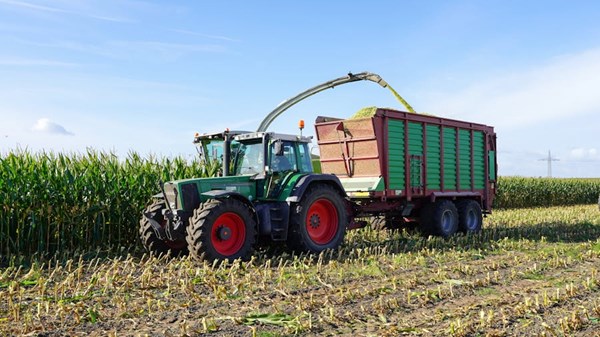
Current and emerging ACOPs focus heavily on the use of vehicles and machinery – areas consistently identified as leading causes of death and injury on farms. This includes guidance on quad bikes, tractors, utes and side-by-side vehicles, as well as their safe operation on uneven terrain and proper maintenance procedures.

Additional codes address responsibilities in multi-operator environments and provide clearer expectations around child safety on farms – an issue of ongoing concern in rural communities.

Alongside regulatory guidance, WorkSafe has expanded its on-the-ground presence. Inspectors are increasingly visiting farms not only to assess compliance, but also to engage directly with farmers and workers.

Hundreds of visits have been carried out in concentrated periods, with around 1,000 farm visits conducted between October and December 2025 with a focus on observing real-world practices involving machinery, hazardous substances and general risk management.

These visits are not purely enforcement-driven; they are also intended to provide practical advice and identify common issues across the sector. This hands-on approach allows WorkSafe to gather valuable data while building relationships within the farming community.


More collaboration

Another important element of WorkSafe’s strategy is its emphasis on education and industry collaboration. Acknowledging that lasting improvements in safety require cultural change, the regulator has partnered with industry groups and events to promote safer practices. Campaigns and resources such as ‘Keep safe, keep farming’ aim to integrate health and safety into everyday decision-making on farms.

By working with organisations that already have credibility in rural communities, WorkSafe’s aim is to influence behaviour in a way that traditional enforcement alone cannot achieve.

Perhaps the most notable shift in WorkSafe’s approach is its move toward a more balanced model of regulation, combining enforcement with proactive guidance.

While WorkSafe retains the ability to take enforcement action where necessary, there is now a stronger emphasis on helping farmers understand and meet their obligations before incidents occur.

This reflects an understanding that many farmers operate in complex, resource-constrained environments where practical, accessible advice can be more effective than punitive measures alone.


Looking ahead

WorkSafe New Zealand’s activities in the agricultural sector represent an evolving strategy.

Through targeted regulation, increased farm visits, collaborative education efforts and a focus on the most significant risks, the regulator is working to improve safety outcomes across one of New Zealand’s most vital industries. While challenges remain, the current approach signals a commitment to reducing harm through both accountability and support.

To read more on WorkSafe’s ACOPs, click here.


DISCLAIMER: All the information published in Rural eSpeaking is true and accurate to the best of the authors’ knowledge. It should not be a substitute for legal advice. No liability is assumed by the authors or publisher for losses suffered by any person or organisation relying directly or indirectly on this newsletter. Views expressed are those of individual authors, and do not necessarily reflect the view of Edmonds Judd. Articles appearing in Rural eSpeaking may be reproduced with prior approval from the editor and credit given to the source.
Content Copyright © NZ LAW Limited, 2026.    Editor: Adrienne Olsen.       E-mail: [email protected]      Ph: 029 286 3650


Health and safety lessons

The eruption of Whakaari/White Island on 9 December 2019 was a tragedy. Of the 47 people on the island when it erupted, 22 people were killed. The other 25 people were severely injured, many with life-changing injuries. The last of the prosecutions brought by WorkSafe due to the eruption concluded on 31 October 2023. We look at the lessons landowners and company directors can learn from these prosecutions.


After the eruption, WorkSafe brought charges against 13 parties under the Health and Safety at Work Act 2015. These included charges against tourism operators, two government agencies responsible for advising on volcanic risks and the landowners. The charges against the landowners are the most legally significant.


Whakaari Management Limited

Whakaari/White Island has been in the Buttle family since 1936. The family currently owns it through the Whakaari Trust; the trust leased the land to Whakaari Management Ltd (WML). The directors of WML are three members of the Buttle family. WML used to contract with tourism operators to allow them to conduct tours on the island. WML had no presence on the island and its staff did not work there.


Charges brought against WML and its directors

WorkSafe charged WML under sections 36 and 37 of the Act. Section 36 requires employers to ensure that, as far as is reasonably practicable, the health and safety of their employees. Section 37 requires an employer to take all reasonably practicable steps to ensure the safety of anyone who enters a workplace controlled by the employer, whether they work for the employer or not.


WorkSafe also charged WML’s directors under section 44. Where an employer is a company, section 44 requires directors to take reasonable steps to ensure that their company complies with its obligations under the Act.


The court’s decisions[1]

The charge against WML under section 36 was dismissed. The court held that section 36 only applied to the employer’s business activities, and WML did not carry out its business on the island. Section 36 will generally only apply to an employer’s premises or anywhere else its staff are working.


WML was convicted[2] under section 37 because Whakaari was a workplace that it controlled, and it had failed to obtain expert advice on the risk posed to visitors by a volcanic eruption. The court found that WML could exercise control over the activities of tour operators on the island and that it had been involved in managing their activities in the past as it had actively engaged with the tour operators regarding their operations. WML could also control the workplace by terminating, or threatening to terminate, its agreements with tourism operators that allowed them to access the island.


Implications for landowners

If you are a landowner and allow other parties access to your property for commercial purposes, you may have health and safety obligations as WML did on Whakaari. Section 37 will not usually apply if you operate solely as a landlord because a landlord will not usually have sufficient control to meet the section 37 requirements. Section 37 also contains a specific exemption to prevent the section from applying to farmers who allow people onto their farms for purely recreational purposes such as walking or hunting.


The charges against the directors of WML under section 44 were dismissed, despite WML being convicted under section 37. The court held that it could not conclude that any directors had breached their personal duty under section 44 based on the company’s failure to meet its obligations as it had no information about how the directors had made their decisions. For example, one director could have argued that WML should have sought expert advice on the risk of volcanic eruption but was outvoted by the remaining two directors.


What directors need to do

Following the Whakaari/White Island decision, WorkSafe will likely seek full disclosure of all board documents before bringing similar future prosecutions.  To avoid any potential criminal liability, any company director who is uncomfortable with their fellow directors’ stance on a health and safety matter should ensure that their dissenting view is recorded.


As a company director, if you are concerned about any decisions that your board proposes to make, or has made, about a health and safety matter, it would be useful to talk with us to clarify your position.

[1] WorkSafe New Zealand v. Whakaari Management Ltd [2023] NZDC 23224.

[2] Sentencing will take place in late February.


DISCLAIMER: All the information published in Commercial eSpeaking is true and accurate to the best of the authors’ knowledge. It should not be a substitute for legal advice. No liability is assumed by the authors or publisher for losses suffered by any person or organisation relying directly or indirectly on this newsletter. Views expressed are those of individual authors, and do not necessarily reflect the view of Edmonds Judd. Articles appearing in Commercial eSpeaking may be reproduced with prior approval from the editor and credit given to the source.
Copyright, NZ LAW Limited, 2022.     Editor: Adrienne Olsen.       E-mail: [email protected].       Ph: 029 286 3650