AgricultureNZ

Development of Approved Codes of Practice

WorkSafe New Zealand has promised greater attention to safety in the agricultural sector when it announced the new four-year ‘Statement of Intent’ on 4 December 2025.

In recent years, WorkSafe has significantly increased its focus on the agricultural sector reflecting the industry’s persistently high rates of serious injury and fatalities. Farming remains one of the most hazardous occupations in New Zealand, and WorkSafe’s evolving approach aims to address the root causes of harm while working more collaboratively with those on the land.

A key development has been the designation of agriculture as a priority high-risk sector. Alongside the other sectors classified as high-risk (construction, manufacturing and forestry), farming now receives a significantly greater share of WorkSafe’s attention and resources.

This prioritisation is embedded in the regulator’s broader strategy which centres on reducing fatalities, minimising serious injuries and targeting the activities most likely to cause harm. Rather than applying a one-size-fits-all regulatory model, WorkSafe is increasingly tailoring its interventions to reflect the unique risks present on farms.


Greater attention

One of the most visible aspects of WorkSafe’s effort is the development of Approved Codes of Practice (ACOPs) specific to agriculture. These codes are designed to clarify what ‘good practice’ looks like in practical, farm-based scenarios.

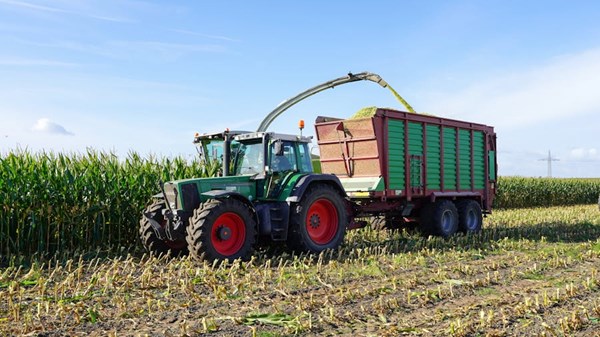
Current and emerging ACOPs focus heavily on the use of vehicles and machinery – areas consistently identified as leading causes of death and injury on farms. This includes guidance on quad bikes, tractors, utes and side-by-side vehicles, as well as their safe operation on uneven terrain and proper maintenance procedures.

Additional codes address responsibilities in multi-operator environments and provide clearer expectations around child safety on farms – an issue of ongoing concern in rural communities.

Alongside regulatory guidance, WorkSafe has expanded its on-the-ground presence. Inspectors are increasingly visiting farms not only to assess compliance, but also to engage directly with farmers and workers.

Hundreds of visits have been carried out in concentrated periods, with around 1,000 farm visits conducted between October and December 2025 with a focus on observing real-world practices involving machinery, hazardous substances and general risk management.

These visits are not purely enforcement-driven; they are also intended to provide practical advice and identify common issues across the sector. This hands-on approach allows WorkSafe to gather valuable data while building relationships within the farming community.


More collaboration

Another important element of WorkSafe’s strategy is its emphasis on education and industry collaboration. Acknowledging that lasting improvements in safety require cultural change, the regulator has partnered with industry groups and events to promote safer practices. Campaigns and resources such as ‘Keep safe, keep farming’ aim to integrate health and safety into everyday decision-making on farms.

By working with organisations that already have credibility in rural communities, WorkSafe’s aim is to influence behaviour in a way that traditional enforcement alone cannot achieve.

Perhaps the most notable shift in WorkSafe’s approach is its move toward a more balanced model of regulation, combining enforcement with proactive guidance.

While WorkSafe retains the ability to take enforcement action where necessary, there is now a stronger emphasis on helping farmers understand and meet their obligations before incidents occur.

This reflects an understanding that many farmers operate in complex, resource-constrained environments where practical, accessible advice can be more effective than punitive measures alone.


Looking ahead

WorkSafe New Zealand’s activities in the agricultural sector represent an evolving strategy.

Through targeted regulation, increased farm visits, collaborative education efforts and a focus on the most significant risks, the regulator is working to improve safety outcomes across one of New Zealand’s most vital industries. While challenges remain, the current approach signals a commitment to reducing harm through both accountability and support.

To read more on WorkSafe’s ACOPs, click here.


DISCLAIMER: All the information published in Rural eSpeaking is true and accurate to the best of the authors’ knowledge. It should not be a substitute for legal advice. No liability is assumed by the authors or publisher for losses suffered by any person or organisation relying directly or indirectly on this newsletter. Views expressed are those of individual authors, and do not necessarily reflect the view of Edmonds Judd. Articles appearing in Rural eSpeaking may be reproduced with prior approval from the editor and credit given to the source.
Content Copyright © NZ LAW Limited, 2026.    Editor: Adrienne Olsen.       E-mail: [email protected]      Ph: 029 286 3650


Good news for rural workers

The government has announced important changes to KiwiSaver that will make it easier for farmers and rural workers to use their KiwiSaver to buy their first farm. These reforms acknowledge the unique way in which farms are owned and operated in New Zealand.

For many in the rural sector, particularly sharemilkers, contract milkers and farm managers eager to climb the property ladder, this represents a meaningful step toward farm ownership.

Legislation giving effect to these changes will be introduced to Parliament in the middle of the year.


Key changes

Until now, KiwiSaver first-home withdrawals have been limited to residential property purchases, with strict requirements that the buyer both owns and lives in the home. This has created barriers for those pursuing farm ownership, as farms are often:

  • Purchased through companies or trusts, rather than in an individual’s name, and
  • Used as both a business and a place of residence, sometimes with accommodation arrangements tied to employment.

The upcoming changes are designed to address these challenges by allowing eligible KiwiSaver members to withdraw their funds to buy a first farm, even where the ownership structure is more complex.


Who can benefit?

The updated rules will apply to people who would ordinarily qualify for KiwiSaver first-home withdrawal, who have contributed to KiwiSaver for at least three years and not previously owned a home (or being approved as a ‘second chance’ buyer). The changes are aimed at first-time farm buyers, not those expanding existing farming operations.


Key conditions

While the rules are becoming more flexible, there are still some important conditions for first-time farm buyers:

  • Control of the farm: You must have a meaningful ownership interest in the entity purchasing the farm (for example, a majority shareholding or controlling interest). This ensures KiwiSaver is being used to support genuine ownership, not passive investment
  • Connection to the property: The farm must still have a residential element connected to you. While the strict ‘live in the home’ rule is being relaxed, the purchase must still align with the intent of helping you secure your primary place of living and working
  • First property focus: The withdrawal remains limited to your first property purchase (or equivalent approved situation), and
  • Standard application process: You will still need to apply through your KiwiSaver provider, providing supporting documents such as a signed sale and purchase agreement and statutory declarations.


Why this matters for farmers

For many in the dairy and wider farming sector, progressing from employment or sharemilking into ownership has always required significant capital. KiwiSaver is often one of the few accumulated assets available to younger farmers. By allowing KiwiSaver funds to be used in farm purchases — and recognising company and trust structures – the law is now better aligned with how farming businesses actually operate.

This change is expected to improve access to deposits for first-time farm buyers, support succession planning within the rural sector and help younger farmers transition into ownership earlier.


Considerations before proceeding

While the changes are positive, there is still some complexity involved. Before relying on KiwiSaver funds for a farm purchase, it is important to consider:

  • How the farm purchase will be legally structured
  • Whether your level of ownership meets the control requirements
  • The impact on lending and finance arrangements, and
  • Ensuring your application meets your KiwiSaver provider’s requirements.

We recommend you seek legal and financial advice early in the process; this will help ensure everything is set up correctly from the outset.


Final thoughts

These reforms mark a practical and long-overdue shift in KiwiSaver policy. By acknowledging that farms are both homes and businesses, the government will create a more realistic pathway for rural New Zealanders to enter farm ownership.

With the changes in the legislative pipeline, if you are considering farm ownership, now is a good time to start planning and take advice on how best to position yourself.


DISCLAIMER: All the information published in Rural eSpeaking is true and accurate to the best of the authors’ knowledge. It should not be a substitute for legal advice. No liability is assumed by the authors or publisher for losses suffered by any person or organisation relying directly or indirectly on this newsletter. Views expressed are those of individual authors, and do not necessarily reflect the view of Edmonds Judd. Articles appearing in Rural eSpeaking may be reproduced with prior approval from the editor and credit given to the source.
Content Copyright © NZ LAW Limited, 2026.    Editor: Adrienne Olsen.       E-mail: [email protected]      Ph: 029 286 3650

Moo-ving on

Fonterra hands the reins to Lactalis

In August, Fonterra announced that it had agreed to sell its major consumer brands. The sale will see Lactalis take ownership of iconic New Zealand brands such as Anchor and Mainland; it comes as part of Fonterra’s strategy to pursue an increased emphasis on its ingredients and foodservice businesses.

The deal brings obvious and substantial benefits to farmer-shareholders, but also raises questions about overseas investment into iconic Kiwi brands and the change of direction for New Zealand’s most profitable company.


The importance of Fonterra

Dairy, and the agricultural sector more generally, remains as New Zealand’s biggest export. With Fonterra’s importance within the dairy industry, the financial health of Fonterra is inextricably linked to the health of New Zealand’s economy.

Fonterra is the crown jewel of the New Zealand economy and, notably, dwarfs other Kiwi businesses in terms of revenue. Responsible for around 30% of global dairy exports, Fonterra reported NZ$26 billion in revenue for the 2025 financial year.

Due to Fonterra’s importance within the New Zealand economy, a deal of this magnitude was always sure to raise eyebrows.


A benefit to farmers

Farmer-shareholders voted overwhelmingly in favour of the deal, with 88.47% of voters supporting the sale – enticed no doubt by the prospect of a sizeable $2.00-per-share capital return and a stronger balance sheet.

After a decade marked by fluctuating payouts, rising costs and global market volatility, many farmers welcome the opportunity to extract value from a sector that has struggled to consistently deliver strong returns.

For many farmers, especially those carrying high debt or facing rising on-farm costs (feed, fertiliser, labour, compliance, etc), the return paid to shareholders from the Lactalis deal offers a rare opportunity to reduce borrowings, reinvest in their operation and/or strengthen cashflow.


Loss of identity?

Brands such as Anchor and Mainland are more than commercial assets – they are cultural signifiers woven into the fabric of New Zealand households. The sale of these brands to an offshore owner revives an old debate about the country’s willingness to let its most recognisable brands and assets slip beyond domestic control. For some, the sale is pragmatic. For others, it represents a quiet erosion of national sovereignty in the food sector.


Potential for vulnerability

Some commentators have pointed to the milk-supply agreement with Lactalis as a cause for concern. While the contract ensures continuity in the short term, it is a rolling three-year arrangement with a three-year notice period.

Industry observers worry that Lactalis, as a multinational with its own long-term strategy, may eventually choose to scale down supply from Fonterra or renegotiate terms. If that were to happen, farmers could face reduced demand for their milk and fewer avenues for profit. Fonterra’s once-integrated chain – from farm to brand to consumer – will now rely heavily on the decisions of a foreign entity whose priorities may not always align with New Zealand’s.


A change of direction

Strategically, the sale aligns with Fonterra’s long-stated ambition to focus on ingredients and foodservice, areas where its scale, milk-sourcing strength and global relationships provide a genuine competitive edge. Analysts have long observed that the consumer division, despite owning some of New Zealand’s most famous brands, tied up billions in capital while generating comparatively modest margins. From this perspective, the sale can be seen as a rational simplification – an attempt to double-down on the parts of the business that generate the highest and most stable returns.

The long-term implications are, however, far more complex. In shedding its consumer arm, Fonterra is effectively relinquishing brand ownership, one of the few buffers that insulated it from the cyclical brutality of the global dairy commodities market. Without the stable earnings and diversification provided by value-added consumer products, Fonterra becomes more exposed to commodity swings, geopolitical shifts and shifting global demand patterns – particularly in key markets such as China.

What is clear is that this transaction represents more than a balance-sheet manoeuvre. It is a redefinition of what Fonterra is, and what it aims to be.


DISCLAIMER: All the information published in Rural eSpeaking is true and accurate to the best of the authors’ knowledge. It should not be a substitute for legal advice. No liability is assumed by the authors or publisher for losses suffered by any person or organisation relying directly or indirectly on this newsletter. Views expressed are those of individual authors, and do not necessarily reflect the view of Edmonds Judd. Articles appearing in Rural eSpeaking may be reproduced with prior approval from the editor and credit given to the source.
Copyright, NZ LAW Limited, 2025.     Editor: Adrienne Olsen.       E-mail: [email protected]  Ph: 029 286 3650


New Zealand’s methane reset

In October 2025, the government confirmed it will reset New Zealand’s biogenic methane target for 2050; it will move from the legislated 24–47% below 2017 levels, to a 14–24% range, while keeping the 10% cut by 2030 and the net-zero target for long-lived gases.

Ministers framed the change as aligning the law with the ‘no additional warming’ approach and recent science. Legislation amending the Climate Change Response Act 2002 (CCRA) is expected before the end of the year.


Who is happy?

The farming sector welcomed the change as a return to what it called ‘realistic’ targets that recognise methane’s short-lived nature. It follows the government’s earlier decision to scrap the He Waka Eke Noa pricing pathway and to remove agriculture from the Emissions Trading Scheme. Farmers believe the lower range reduces existential pressure on farming businesses and allows focus on practical mitigations (breeding, inhibitors, feed tech, etc) instead of a levy.


But who is not pleased?

Climate scientists and environmental organisations criticised the reset as a retreat from ambition. The Climate Change Commission had advised tightening the 2050 methane cut to 35–47%, not weakening it, to keep New Zealand on a consistent path of 1.5°C, being the global climate goal of limiting average warming as set out in the 2015 Paris Agreement.

Critics also worry the government is leaning on the ‘no additional warming’ framing to justify slower cuts, which they say risks higher cumulative warming and undermines international credibility. Pacific climate officials also voiced disappointment, stressing regional vulnerability to warming-driven sea-level rise.

Economic ramifications

In the short term, the reset eases compliance and cost uncertainty for the primary sector, New Zealand’s largest export engine, by removing an impending farm-level price and lowering the statutory target trajectory. It is supportive for farm profitability and investment confidence, especially amid tight margins and volatile commodity prices.

In the medium term, however, risk shifts to market access and brand value: key customers and trade partners such as supermarkets, financiers and governments increasingly require demonstrable progress on agricultural emissions. If the reset is perceived as backsliding, exporters could face stricter private sector standards or sustainability premiums that erode any domestic cost advantage.

The government points to increased funding for agricultural research and development, and on-farm tools to deliver reductions without pricing. However, the scale and pace of deployment will determine whether exporters can defend ‘green’ credentials in premium markets.

Legal and policy implications

Resetting the methane target requires amendment of the CCRA; it will then cascade into the emissions budgets and sector strategies. The government has also flagged wider CCRA changes (eg: industrial allocation processes and a framework for recognising non-forestry carbon removals), which could rebalance where abatement comes from across the economy.

The reset crystallises a familiar conflict in New Zealand politics – rural stability versus climate ambition. For the governing Coalition, the move bolsters rural support and answers long-standing grievances about ‘unscientific’ targets and levies.

For Opposition parties and many climate advocates, the reset is symptomatic of a retreat from climate leadership, handing them a clear attack line with urban and youth voters. Internationally, lowering the target while relying on ‘no additional warming’ accounting invites scrutiny just as New Zealand positions itself in trade-and-sustainability forums through to 2030–35.

The electoral stakes are therefore not only regional, but also reputational. Whether the government can prove real-world methane reductions, via technology and practice change, fast enough to neutralise claims of backsliding will likely feature in the next campaign cycle.

Bottom line

The methane reset reduces immediate regulatory heat on farmers but raises the bar on delivery; without a price, the credibility of New Zealand’s climate stance now hinges on measurable, short-term cuts from innovation and extension on farm. Whether that happens quickly enough will shape export earnings, legal settings and the next election’s climate battleground.


DISCLAIMER: All the information published in Rural eSpeaking is true and accurate to the best of the authors’ knowledge. It should not be a substitute for legal advice. No liability is assumed by the authors or publisher for losses suffered by any person or organisation relying directly or indirectly on this newsletter. Views expressed are those of individual authors, and do not necessarily reflect the view of Edmonds Judd. Articles appearing in Rural eSpeaking may be reproduced with prior approval from the editor and credit given to the source.
Copyright, NZ LAW Limited, 2025.     Editor: Adrienne Olsen.       E-mail: [email protected]      Ph: 029 286 3650


Shearing the love

Focus on New Zealand wool

In what has certainly come as a big boost to sheep farmers and the agricultural sector, the government announced that from 1 July 2025 all government agencies must use woollen fibre products in the construction and refurbishment of government buildings – where practical and appropriate.


The importance of wool

New Zealand is currently the world’s third largest wool producer, trailing only China and Australia. Our wool accounts for around 9% of total global wool production.[1]

Home to around 23.3 million sheep, 80% of New Zealand‘s wool clip is ‘strong wool’ that is suitable to use in building products such as carpets, rugs, insulation and acoustic panels.

The 120,000 tonnes of wool that New Zealand produces annually generated $549 million in 2024.The government, however, believes this figure can be improved upon by prioritising a more direct approach to use more natural fibres in government buildings.


New changes

The government has agreed to an amendment to Rule 69 of the Procurement Rules; this rule requires agencies to note the Construction Procurement Guides when procuring construction works

(essentially meaning agencies must prioritise wool when possible). The changes will affect two categories of government buildings:

  1. New construction works when the maximum total estimated value of the build meets or exceeds $9 million, and
  2. Refurbishments when the maximum total estimated value of the work meets or exceeds $100,000.

If an agency has chosen not to use woollen fibres, it must report annually to the Ministry of Business, Innovation, and Employment (MBIE) regarding why the use of woollen fibres was not practical or appropriate.


A developing trend?

This announcement continues a developing trend as the government clearly signals a more supportive approach towards the wool industry.

In November 2024, New Zealand signed the Agreement on Climate Change, Trade and Sustainability (ACCTS) with Switzerland, Costa Rica and Iceland to remove tariffs on hundreds of sustainable goods and services (including wool products). The ACCTS aims to prioritise New Zealand’s sustainable exports.

Alongside the ACCTS, the government also made a raft of changes to the Emissions Trading Scheme (ETS) that limit the ability of farmers to turn their most productive farmland into forestry for the purpose of obtaining carbon credits. While the price of wool continued to drop, many farmers had begun to move away from wool in favour of planting forestry with the perception being that this approach was likely to yield a higher profit than farming sheep. The changes to the ETS provide a further boost to the wool industry.


The benefits of using wool

For close to 150 years, the sheep industry was the backbone of New Zealand’s economy. While the profitability of wool and sheep farming has reduced with the creation and implementation of synthetic fibres in clothing and other manufactured goods, the quality of New Zealand’s wool has not decreased.

Wool outperforms synthetic fibres when it comes to sustainability and longevity.

Wool’s natural qualities allow it to dampen sound and absorb pollutants. As well, wool creates healthier indoor environments by naturally regulating humidity and improving air quality.


What are farmers saying?

The reaction from New Zealand farmers has been, unsurprisingly, overwhelmingly positive. Federated Farmers’ Meat & Wool just-retired chair, Toby Williams said that the government’s announcement was a clear vote of confidence in the future of New Zealand wool as a natural and sustainable product.

Mr Williams praised the long-term effects of the decision, saying, “For too long, synthetic alternatives have dominated the list of preferred construction materials, despite wool being a better option in so many ways.

“In the past, it’s felt like a total slap in the face to see our own Government choosing those synthetic alternatives over sustainable and locally grown woollen products.

“Today’s announcement goes a long way in putting those past wrongs right, and is certainly a very positive step in the right direction.

“To sum it up in two words? Shear brilliance.”

[1] NZ Wool lndustry fact sheet, 9 April 2025.


DISCLAIMER: All the information published in Rural eSpeaking is true and accurate to the best of the authors’ knowledge. It should not be a substitute for legal advice. No liability is assumed by the authors or publisher for losses suffered by any person or organisation relying directly or indirectly on this newsletter. Views expressed are those of individual authors, and do not necessarily reflect the view of Edmonds Judd. Articles appearing in Property Speaking may be reproduced with prior approval from the editor and credit given to the source.
Copyright, NZ LAW Limited, 2022.     Editor: Adrienne Olsen.       E-mail: [email protected].       Ph: 029 286 3650